
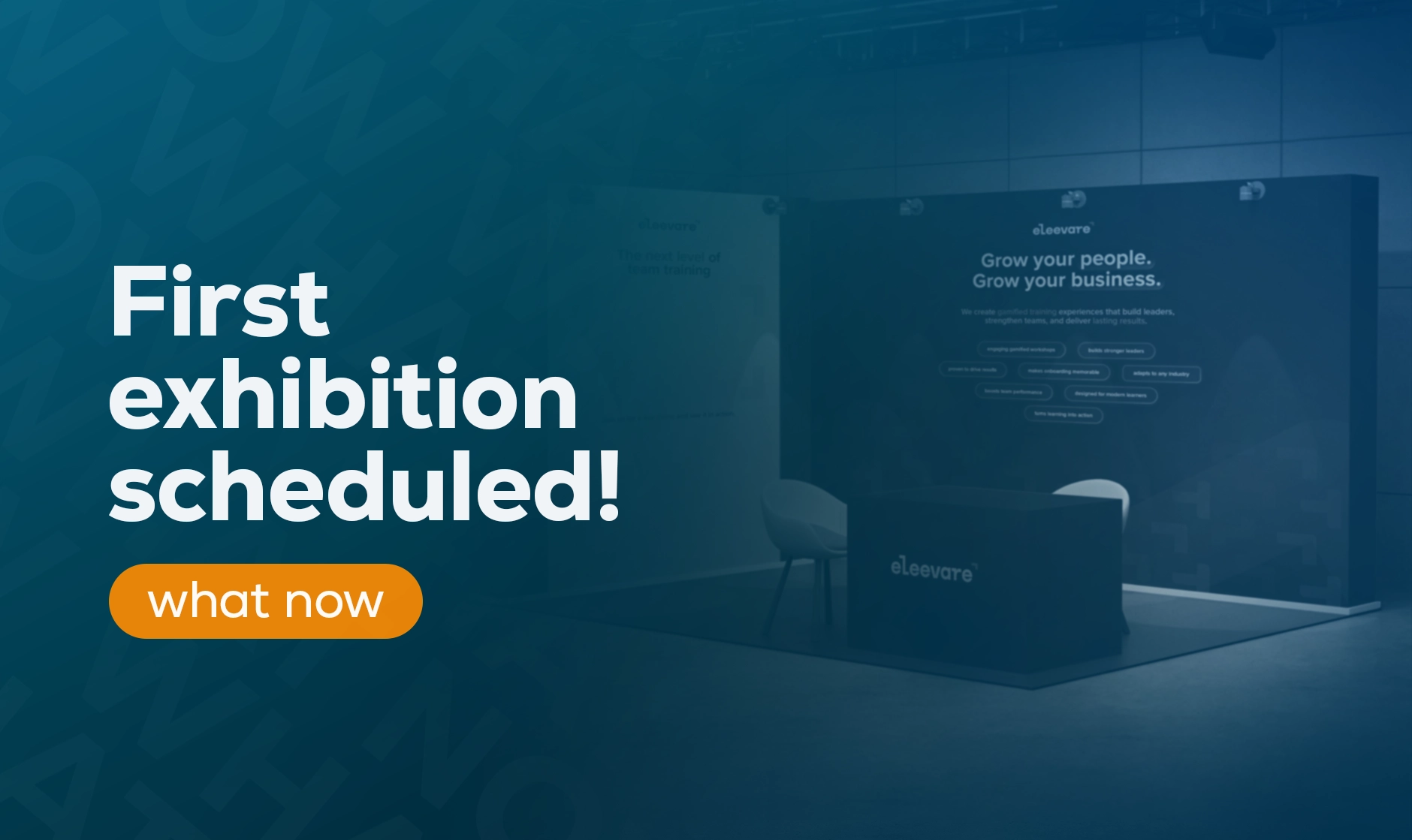

When you’re heading to your first expo, the booth is often the most abstract part of the process. Booking the space, confirming dates, and handling logistics all have clear outcomes. But the booth requires you to turn an empty stand into something that looks professional, communicates what you do, and attracts the right people. With so many options and opinions, it’s easy to overthink every decision before you even know where to start.
The good news is that a successful first expo booth doesn’t need to be impressive or elaborate. It needs to be clear. When people can quickly understand what you do, recognize your brand, and know how to engage with you, you’ve already done most of the work. Everything else, the extras, the polish, the upgrades, can come later.
Let’s start with the basics...
Before you go down the rabbit hole of colors, banners, or layouts, you need one simple sentence that explains what you do and why someone should care (what’s in it for them?). At an expo, people are often rushed, scanning quickly, and overloaded with information. If your booth requires burning a heavy load of mental calories to understand, people will skip it, or your team will end up explaining what you do instead of focusing on generating leads.
A strong message quietly answers three questions in the visitor’s head:
You don’t need to spell these out, but your sentence should make them obvious at a glance.
This is where many exhibitors struggle (not only first-timers). Language that sounds polished and clear internally often turns into buzzwords on a booth wall. Your team knows exactly what you do and in what context (well, at least they should..), but most people passing by your booth have no idea, unless you’re very well known.
One of the biggest mistakes (first-time) exhibitors make is trying to show everything at once: what you do, your latest offer, every feature and benefit, plus a mix of colors and ideas all competing for attention. It’s understandable, you want to make the most of the space. But clarity always beats complexity.
A good booth feels visually calm. One main message, one clear visual style, and one or two brand colors used on purpose go a long way. When everything looks like it belongs together, your brand feels more credible, even if your booth is small or new. Clean layouts, clear headings, and a bit of breathing room help visitors understand what you do at a glance and make your team feel approachable.
Your booth needs one strong, large visual to do the heavy lifting. A single main backdrop, banner, or back wall will start promoting your brand long before you speak to anyone. From across the hall, it should be easy to spot, easy to read, and clearly show your main message at eye level (avoid putting text or QR codes at the bottom). Smaller signs, subtle designs, or layouts packed with detail might look nice up close, but they usually become unreadable and easy to overlook in a busy expo hall.
This is where simple design really wins. Big type, generous spacing, and strong contrast help your message stay clear from five to ten meters away. If someone can’t tell what you do in a split second, they won’t stop to figure it out, and nothing else on your booth can fix that later.
People usually forget a lot of details from a single conversation, let alone at an expo where they’ve had countless talks and information overload jumping at them from every corner. But they can be reminded by that little giveaway you give them at your booth. A single, well-designed one-pager or flyer is usually enough. It should reinforce your main message, include your name and contact details, and give visitors a reason to follow up. Think of it as a memory cue, not a deep dive. It’s meant to remind them of you later, not to cover everything upfront.
One of the easiest opportunities to miss at your first expo is helping visitors know what to do after stopping by your booth. People might stop, chat, and get excited, but then walk away without taking any action, leaving all that interest behind. A clear next step is simply the action you want visitors to take after learning about you. It could be booking a demo, scanning a QR code, signing up for a follow-up, or grabbing a checklist or guide, whatever counts as a “win” for your booth. Think ahead of the event about how you want to measure it, because it’s important to know what works and what brings real results so you can improve next time (not to mention ROI and KPIs).
Once you know your next step, make it obvious and easy. Show it on your backdrop, flyer, or digital takeaway, and have your team repeat it naturally in conversation. The clearer you make it, the more likely visitors are to follow through. A simple, visible next step turns curiosity into connections and helps your first expo deliver results with less stress.
Your team is part of your booth’s design. Coordinated clothing, like branded shirts, a simple color palette, or small accessories, helps them look put-together and approachable without feeling stiff or uniformed. Even if you don’t have branded shirts or hoodies (yet), you can match your brand colors and use a simple lanyard with your logo to show you belong to the booth and are ready to answer questions.
Your first expo doesn’t have to feel overwhelming. Focus on the essentials: a clear message, a visually calm and consistent booth, one strong backdrop, a simple takeaway, a clear next step, and a supporting team. These are the pieces that make a booth work and set you up for success. Focus on these, and your first expo will already be off to a strong start.
There are plenty of extras you can add later: giveaways like pens, tote bags, or lip balm, an extra banner, a screen looping your product demo, or interactive elements. Don’t feel limited by this list, as these are just the basics you should plan first. Adding matching notebooks, branded water bottles, or small extras to an already designed booth is much easier than trying to design the whole booth around the add-ons.
Before you send anything to print, ask yourself:
If the answer is yes, your booth is ready to do its job. And remember to have fun, enthusiasm is your best seller!
Tell me what you’re planning, and let’s make it happen.

